The Malta Budget 2027 was presented in Parliament on 26 October 2026. It brings a lower tax rate for small companies, higher fees for work permits and visitors, and another year of energy subsidies.
Below, A2CO sets out the main measures in a series of infographics, with the key figures written out under each one.
Malta Budget 2027 at a Glance
- Growth of 3.8% is forecast for 2027, with the deficit planned at 2.6% of GDP and public debt at 46.8%.
- Companies with turnover up to €1 million pay 25% tax on profits they retain or reinvest, down from 35%.
- Third-country work permits rise to €800 per application, plus a new €400 annual infrastructure contribution.
- The tourist eco-contribution rises to €8 a night in hotels and €10 a night in short lets from 1 January 2027.
- Wages rise by a €6.41 weekly COLA, pensions rise by €10 a week, and workers receive a tax-free Super Bonus of up to €1,000.
- Around €400 million again goes to keeping energy and fuel prices stable.
Economy and Public Finances
Growth Slows Slightly, Unemployment Stays Low
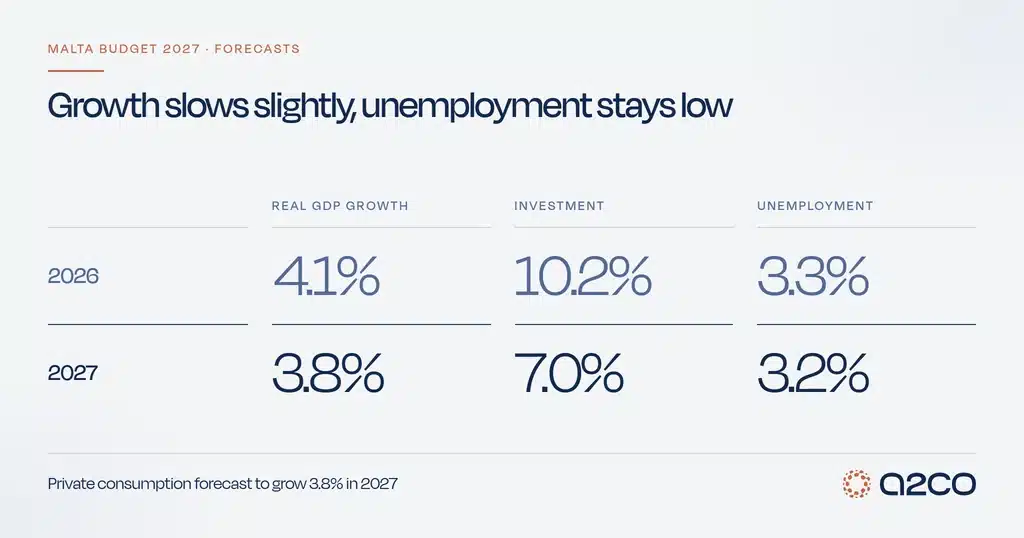
Malta’s economy grew 4.4% in the first half of 2026, against 1.2% across the EU. The government forecasts real GDP growth of 4.1% for 2026 and 3.8% for 2027.
Investment growth is expected to ease from 10.2% to 7.0%, while unemployment is forecast at 3.2% in 2027.
Energy Prices Held Stable
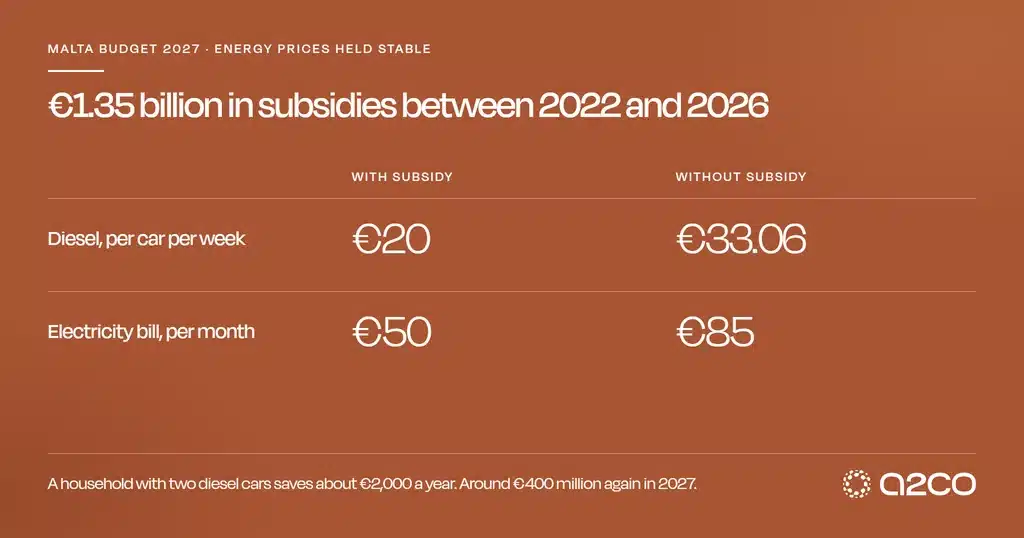
Between 2022 and 2026, the government spent €1.35 billion keeping fuel and electricity prices fixed. Without the subsidy, diesel would cost €33.06 a week per car instead of €20, and a €50 monthly electricity bill would be €85.
A household with two diesel cars saves about €2,000 a year. Around €400 million is set aside to continue the subsidies in 2027.
Deficit and Public Debt
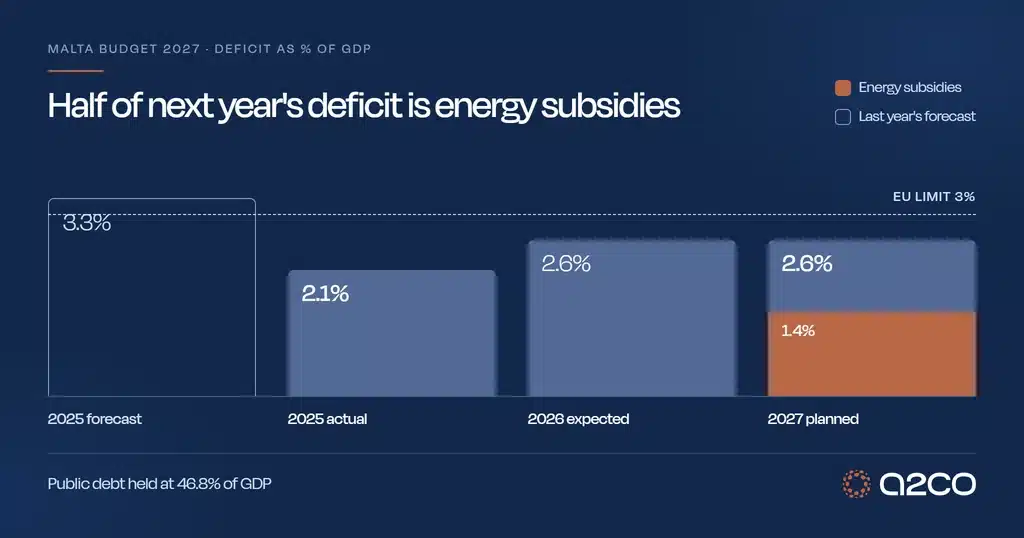
The deficit is planned at 2.6% of GDP in 2027, the same as expected for 2026 and below the EU’s 3% limit. Energy subsidies account for 1.4% of GDP, more than half of the total.
The 2025 deficit came in at 2.1%, well below the 3.3% forecast a year earlier. Public debt is held at 46.8% of GDP.
Government Revenue and Spending
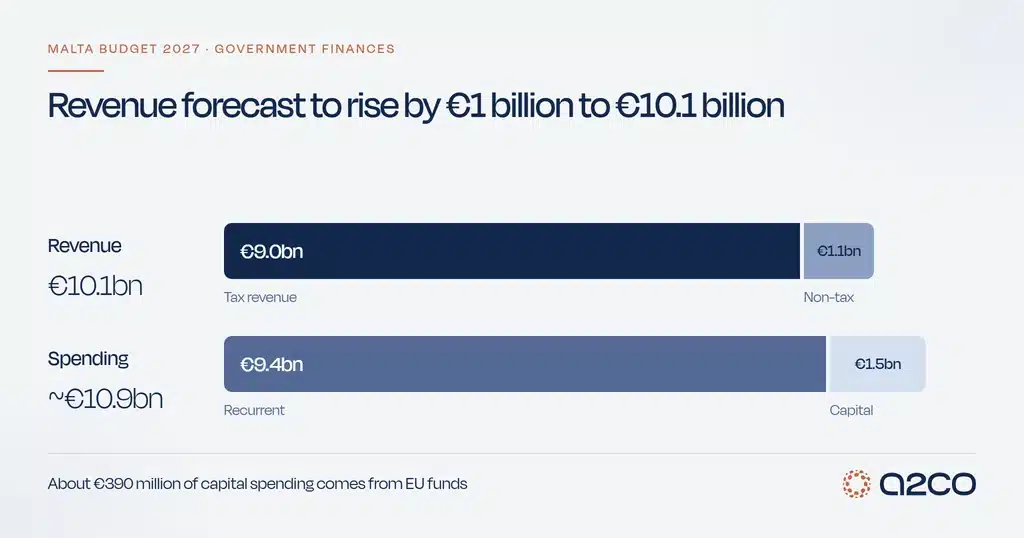
Revenue is forecast to rise by €1 billion to €10.1 billion, made up of €9.0 billion in tax and €1.1 billion in non-tax revenue. Spending comes to about €10.9 billion, of which €9.4 billion is recurrent and €1.5 billion is capital.
About €390 million of capital spending comes from EU funds.
Tax Measures for Businesses and Parents
A 25% Tax Rate for Small Companies
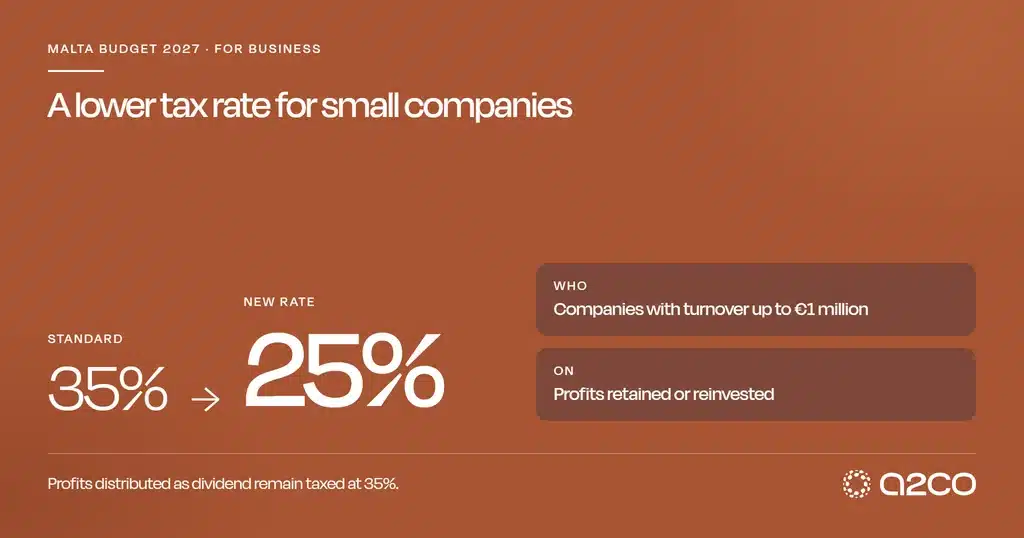
Companies with turnover of up to €1 million will pay 25% tax on profits they retain or reinvest, instead of the standard 35%. Profits distributed as dividends remain taxed at 35%.
All current government schemes for business are renewed for 2027.
Tax-Free Thresholds for Parents
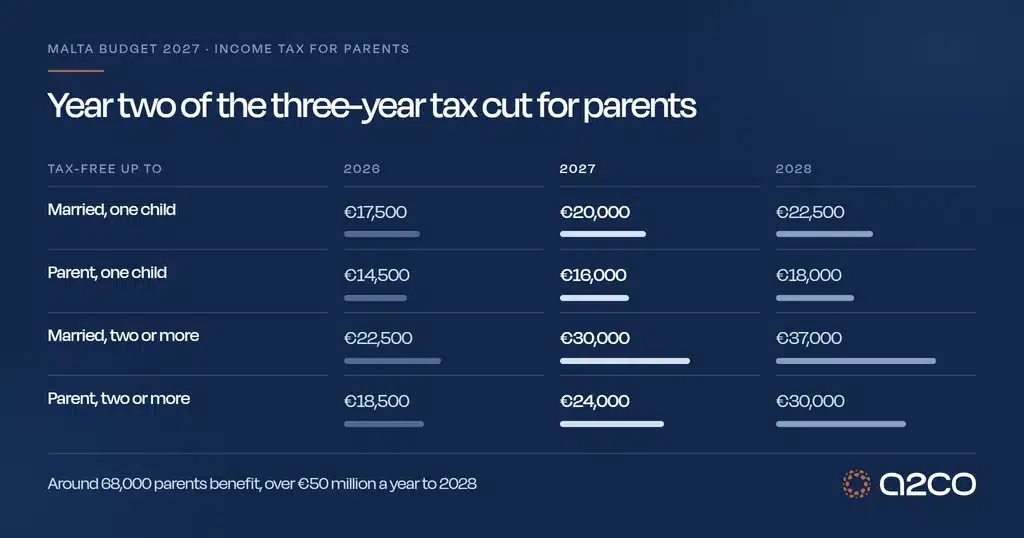
2027 is year two of the three-year, €160 million tax cut for parents. A married couple with one child pays no tax on income up to €20,000, rising to €30,000 for couples with two or more children.
A single parent with one child is tax-free up to €16,000, or €24,000 with two or more children. Around 68,000 parents benefit.
VAT and Income Tax Administration
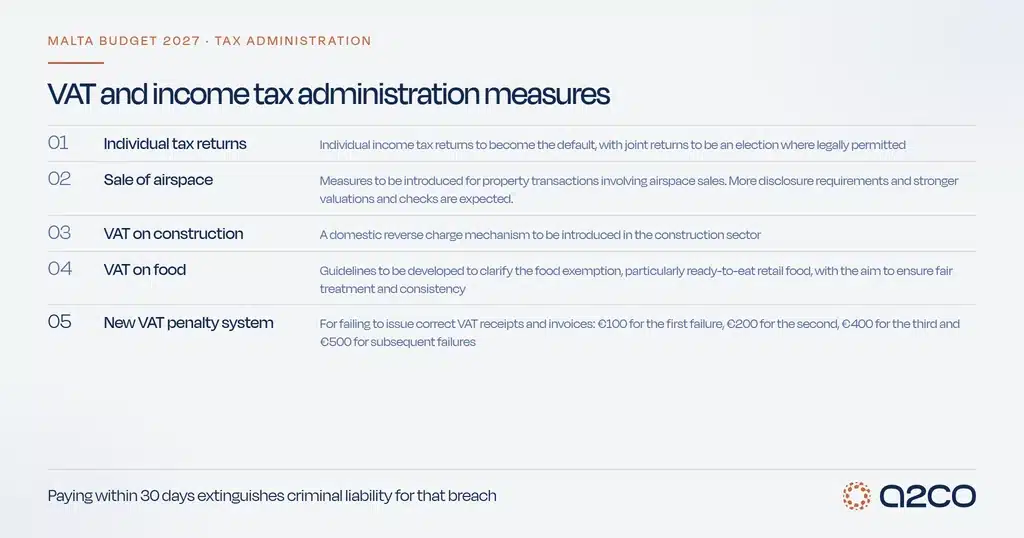
Individual income tax returns become the default, with joint returns kept as an option where legally permitted. Sales of airspace will face more disclosure requirements and stronger valuation checks.
A domestic reverse charge is introduced for VAT in construction, so the buying business accounts for the VAT. Guidelines will also clarify the VAT exemption on food, particularly ready-to-eat retail food.
A new penalty system applies to businesses that fail to issue correct VAT receipts and invoices: €100 for the first failure, €200 for the second, €400 for the third and €500 for later failures within 24 months. Paying within 30 days extinguishes criminal liability for that breach.
New Fees and Charges
Higher Fees for Third-Country Work Permits
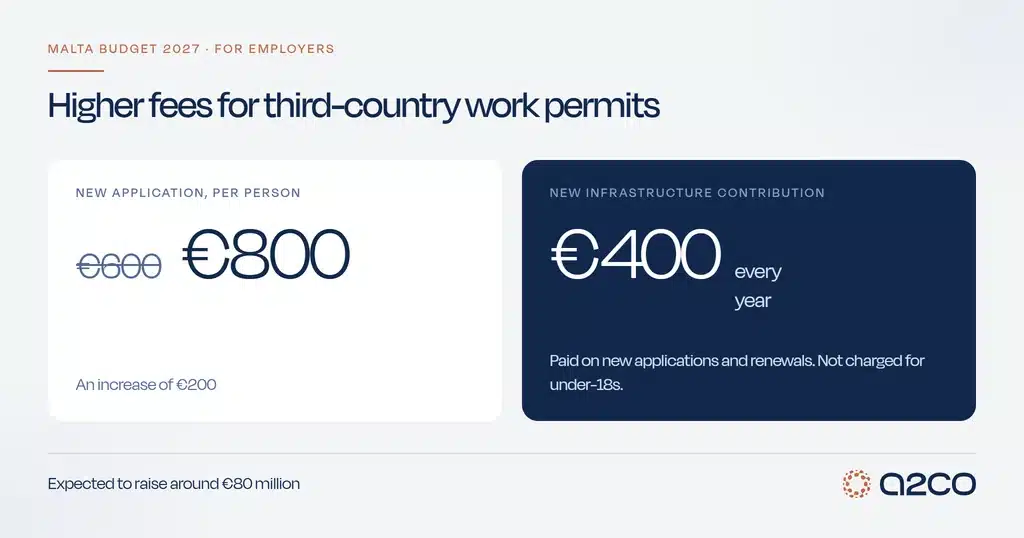
The fee for a new third-country work permit application rises by €200 to €800 per person. A new €400 annual infrastructure contribution applies to new applications and renewals, but is not charged for under-18s.
The government expects the changes to raise around €80 million.
A Higher Eco-Contribution for Visitors
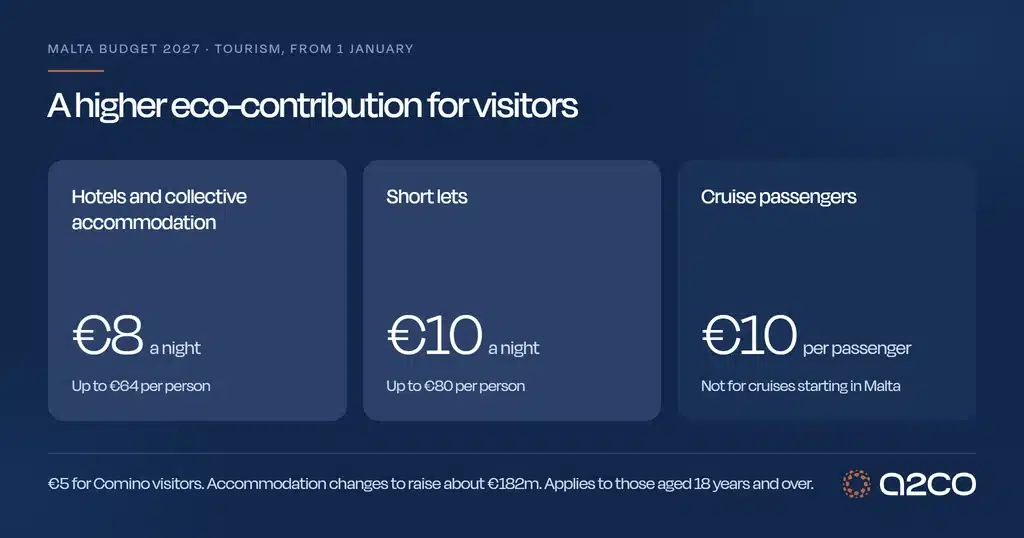
From 1 January 2027, visitors aged 18 and over pay €8 a night in hotels and collective accommodation, capped at €64 per person, and €10 a night in short lets, capped at €80. The accommodation changes are expected to raise about €182 million.
Cruise passengers pay €10 each, except on cruises starting in Malta, and Comino visitors pay €5.
Higher Gozo Ferry Fares for Non-Residents
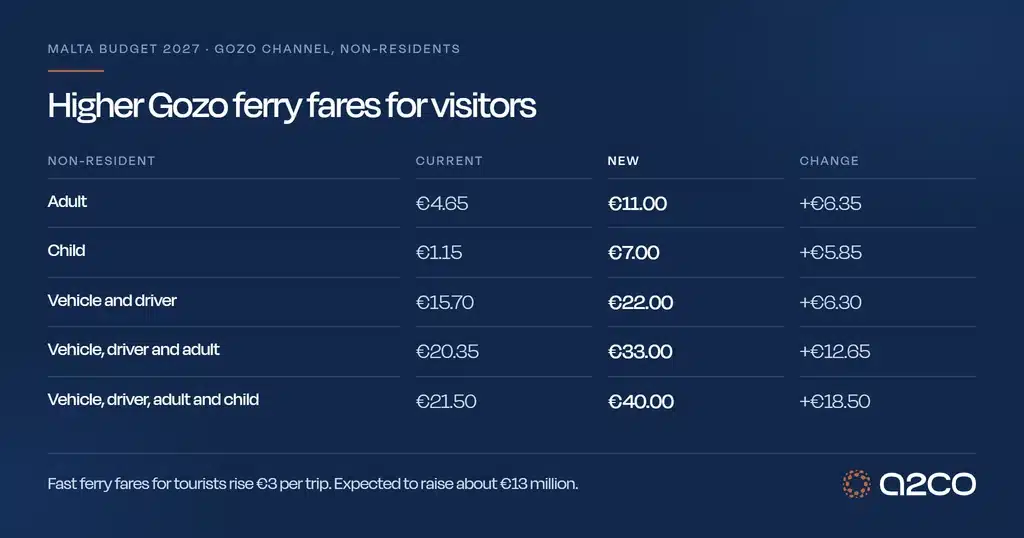
Non-resident fares on the Gozo Channel ferry rise from €4.65 to €11 for adults, from €1.15 to €7 for children and from €15.70 to €22 for a vehicle and driver. Fast ferry fares for tourists rise by €3 per trip.
The changes are expected to raise about €13 million.
Registration Fees for Recreational Boats
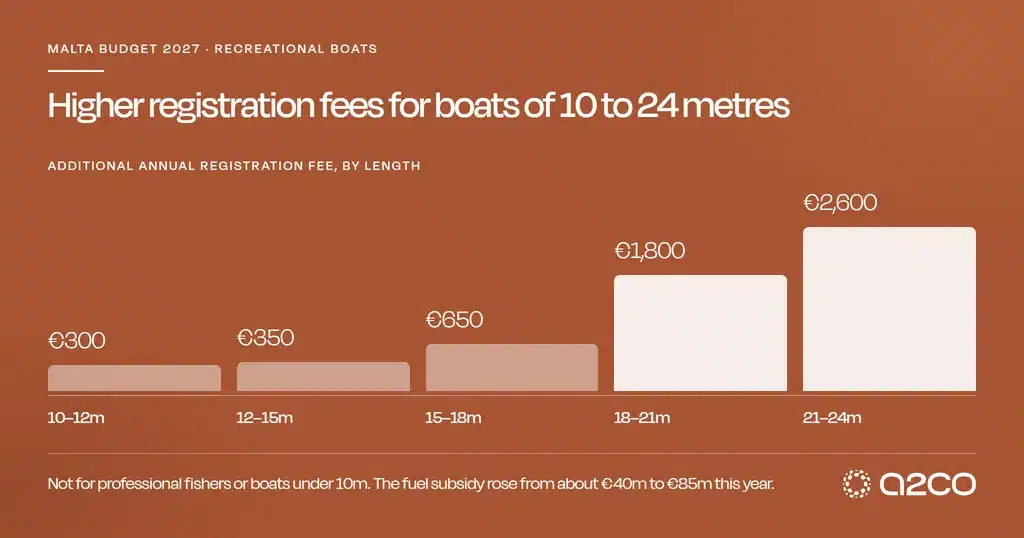
Recreational boats of 10 to 24 metres pay an additional annual registration fee, from €300 for boats of 10 to 12 metres up to €2,600 for boats of 21 to 24 metres. Professional fishers and boats under 10 metres are not affected.
The measure is expected to raise about €3 million.
Limitation of Free Services
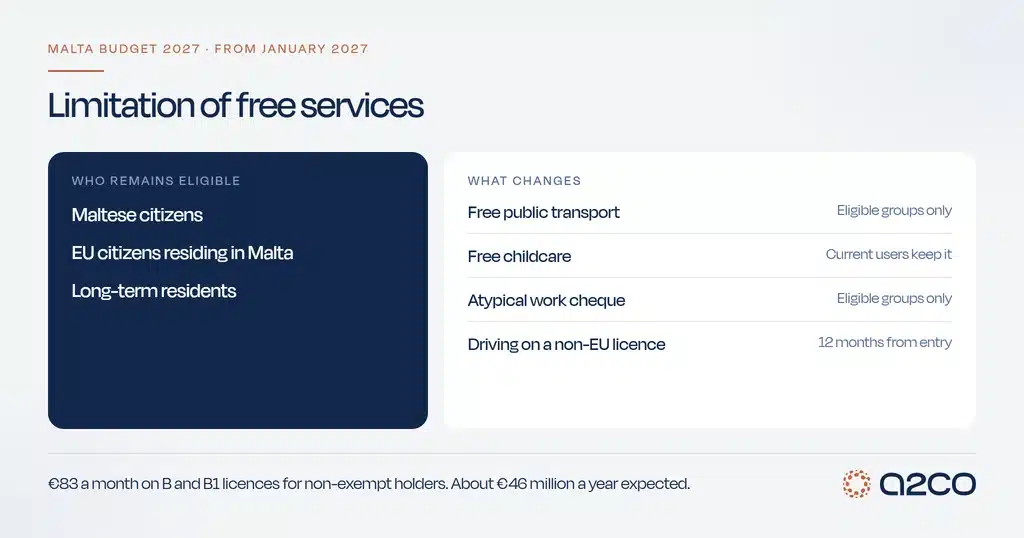
From January 2027, free public transport, free childcare and the atypical work cheque are limited to Maltese citizens, EU citizens residing in Malta and long-term residents. People already using free childcare keep it.
Non-EU driving licences can be used for 12 months from entry, and non-exempt holders of B and B1 licences pay €83 a month. These measures are expected to bring in about €46 million a year.
Wages, Pensions and Social Support
More Each Week for Workers and Pensioners
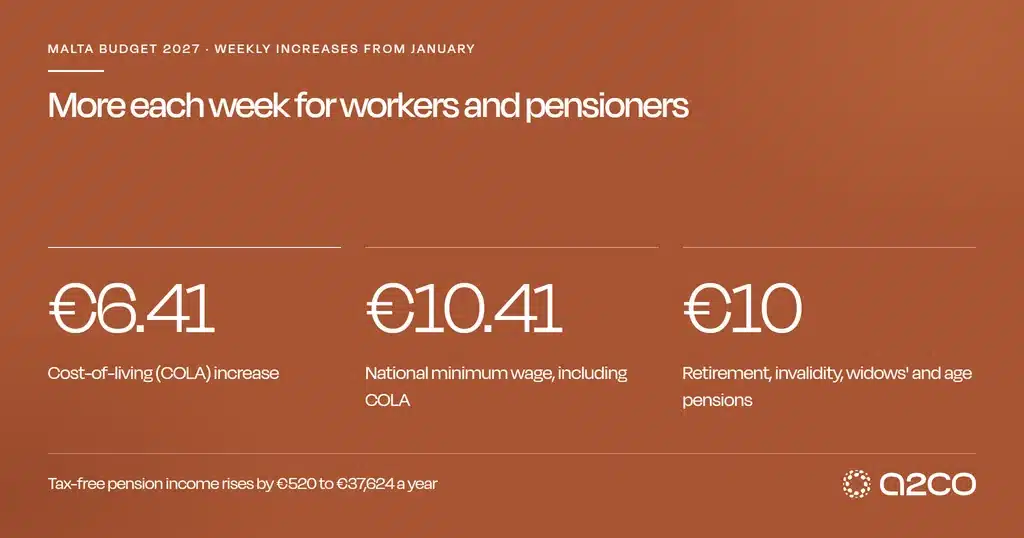
From January, the cost-of-living adjustment (COLA) adds €6.41 a week to wages, and the national minimum wage rises by €10.41 a week including COLA. Retirement, invalidity, widows’ and age pensions rise by €10 a week.
Tax-free pension income rises by €520 to €37,624 a year.
A Tax-Free Super Bonus of up to €1,000
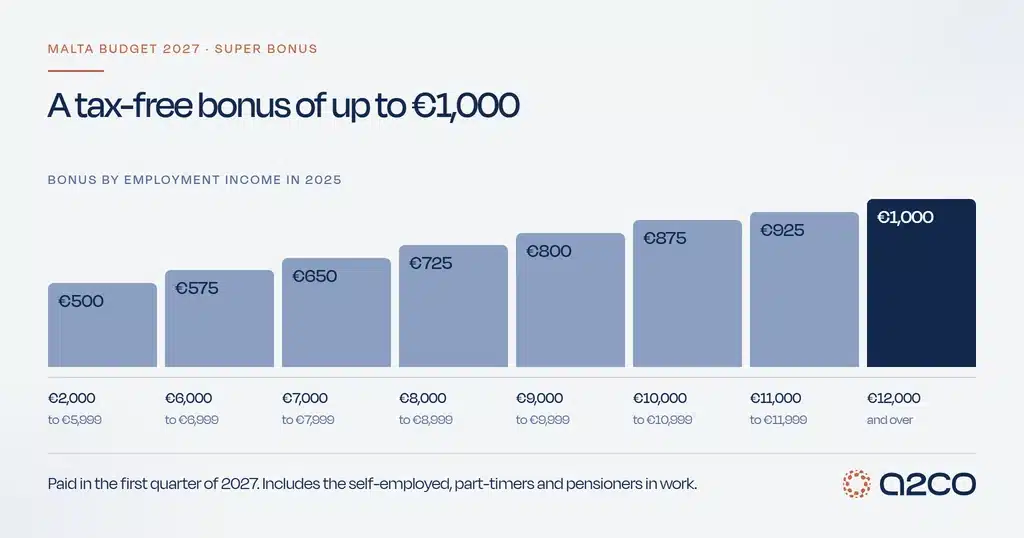
Workers who earned €12,000 or more in 2025 receive a tax-free Super Bonus of €1,000, while those who earned between €2,000 and €11,999 receive between €500 and €925.
The bonus is paid in the first quarter of 2027 and includes the self-employed, part-timers and pensioners in work.
Pensions
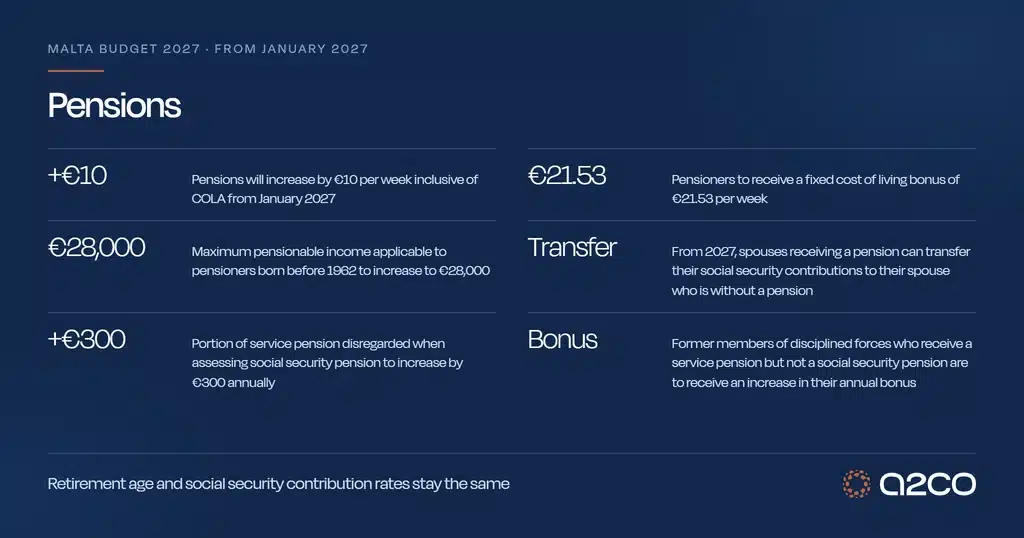
On top of the €10 weekly increase, every pensioner receives a fixed cost-of-living bonus of €21.53 a week. The maximum pensionable income for pensioners born before 1962 rises to €28,000.
From 2027, spouses receiving a pension can transfer their social security contributions to a spouse without one. Over 7,000 widows move to the full two-thirds pension, and about 3,200 married women gain a pension through transfers between spouses.
The retirement age and social security contribution rates stay the same.
More Support for Families and Carers
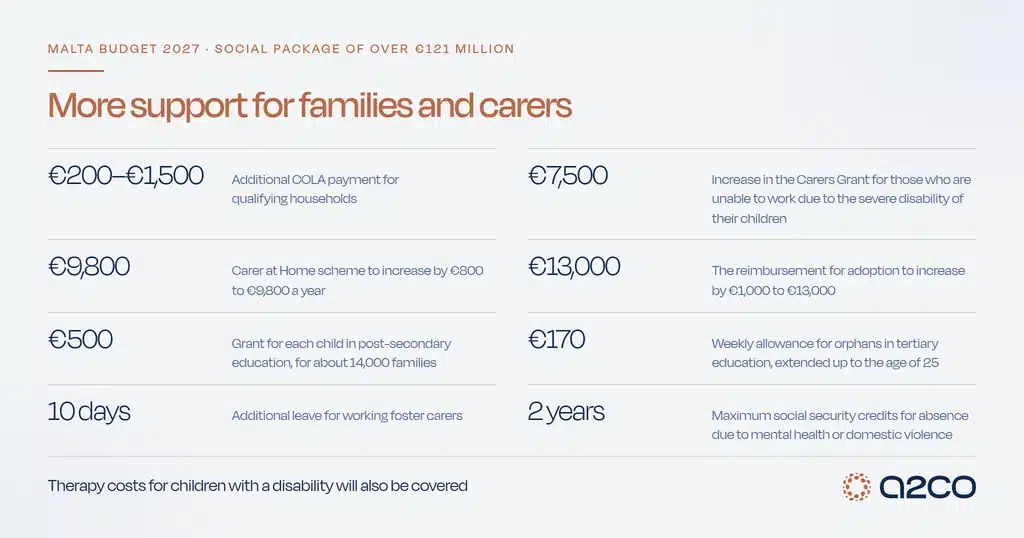
The social package is worth over €121 million. Qualifying households receive an additional COLA payment of €200 to €1,500, the Carers Grant rises to €7,500 a year and the Carer at Home benefit rises by €800 to €9,800.
Families receive €500 for each child in post-secondary education, about 14,000 families in all, and the reimbursement for adoption rises to €13,000. Orphans in tertiary education receive €170 a week up to the age of 25, working foster carers get 10 extra days of leave, and therapy costs for children with a disability are covered.
Health and Energy Investment
Emergency treatment spaces at Mater Dei Hospital will double from 35 to 70, and a new mental health unit will add 135 beds. Companion costs are now covered for adults treated abroad.
On energy, €75 million goes to electricity distribution next year. The renewables target is 25% by 2030, up from 18.8% in 2025, and a first 300MW offshore wind farm is under study.
What Budget 2027 Means for Businesses in Malta
For owner-managed companies, the 25% rate is the headline change, but it only applies to profits kept in the business. Employers of third-country nationals face higher costs on every new permit and renewal.
Businesses that issue receipts and invoices should also review their VAT processes ahead of the new penalty system. A2CO supports companies in Malta with tax incentives, bookkeeping and work permits in Malta.
Source: Malta Budget 2027 speech. Forecasts and revenue figures are government estimates, and details may change once the measures are legislated.