Prediction markets Europe regulation is entering a new phase as regulators assess whether these platforms fit within gaming, betting, financial services or hybrid frameworks. Malta is positioning itself as an early mover, and existing Malta Gaming Authority (MGA) structures may play an important role while further rules develop.
As platforms grow, regulators intervene and operators look for credible jurisdictions where they can build within clearer rules, Malta is now part of that discussion. Public comments from Economy Minister Silvio Schembri, together with industry reporting, suggest that some prediction market models may be assessed through existing or updated Malta Gaming Authority structures, although this should not be read as a final standalone prediction market licence regime.
For operators, founders, investors and technology providers, the issue is no longer whether prediction markets will attract regulatory attention. They already do. The more important question is how a specific prediction market model should be classified, which regulatory framework may apply, and whether the product can be structured in a way that satisfies regulatory expectations around user protection, market integrity, AML, governance and cross-border access.
Prediction Markets Europe Regulation Is at a Turning Point
Prediction markets are gaining more attention across Europe because they sit close to several regulated sectors. A platform may allow users to take a position on the outcome of an election, sports event, crypto price movement, policy decision or economic event. That can look simple from a user perspective, but it creates difficult questions for regulators.
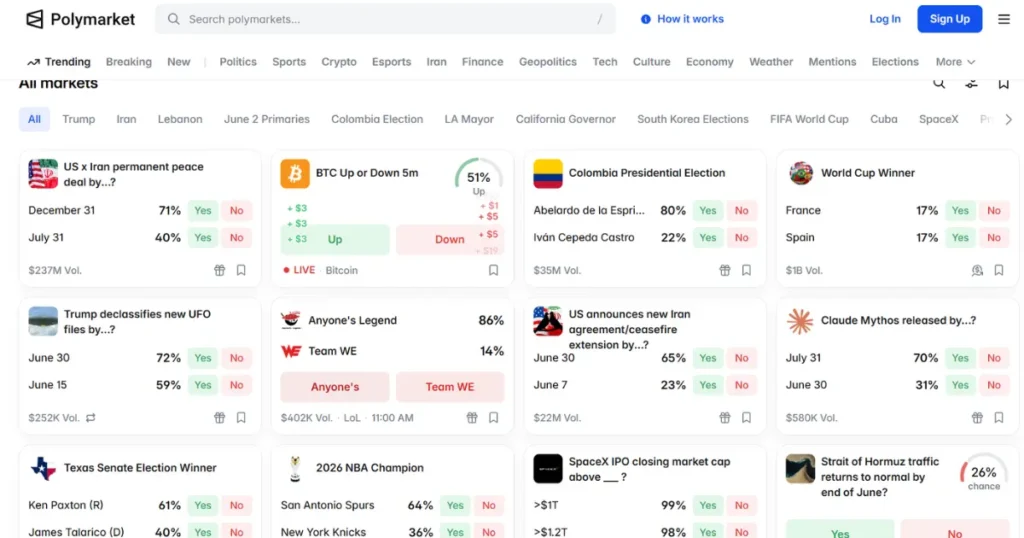
Recent developments show that prediction market regulation Europe is no longer a theoretical issue. Spain has reportedly taken action against access to Polymarket and Kalshi, which reflects a wider concern that these products should not operate in a grey area where local gambling, financial services or consumer protection rules may apply.
For operators, the practical problem is clear. Europe does not offer one single regulatory answer. A model that may be treated in one way in one country could face a different assessment elsewhere. This is why operators need country by country analysis before launching, marketing or accepting users from a specific market.
The broader trend is towards regulated prediction markets Europe, but the route is still uneven. Some countries may treat these products as gambling. Others may focus on financial instruments, event contracts, market integrity or consumer risk. Operators looking for a prediction market licence Europe strategy should avoid assuming that one approval will solve every regulatory issue.
The Global Regulatory Debate Around Prediction Markets
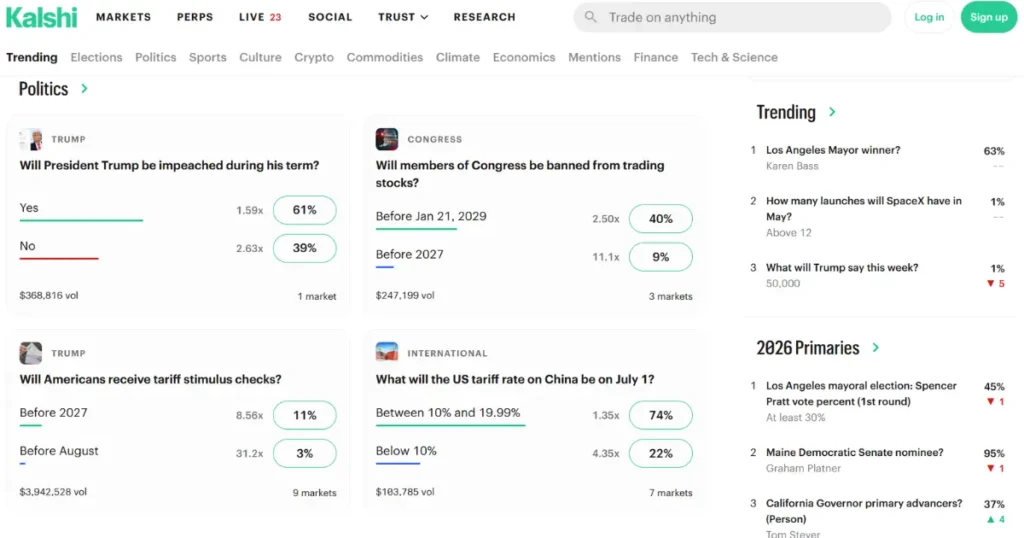
Prediction markets Europe regulation forms part of a wider global debate about how event-based markets should be classified.
Broadly speaking, three regulatory approaches are emerging. Some regulators may view prediction markets as betting or gambling activity, particularly where users stake value on uncertain future events and receive a payout based on the outcome. Others may view certain models as financial or quasi-financial products, especially where the product resembles an event contract, derivative-style instrument or trading market. A third approach may develop around bespoke or hybrid frameworks that recognise features of both gaming and financial markets.
For operators, the practical consequence is that there is currently no universally accepted classification. A product that may be viewed as gaming in one jurisdiction could attract financial services, crypto, consumer protection or market integrity scrutiny in another.
This is why regulatory analysis needs to focus on the mechanics of the product rather than the terminology used to describe it. The term “prediction market” may be useful commercially, but regulators will look at how the product actually works.
Why Prediction Markets Are Difficult to Classify
The question “are prediction markets gambling” is useful, but incomplete. The better question is how the specific model works.
Some platforms allow users to stake value on event outcomes. Some products may look like fixed odds betting, especially where the operator prices the market and users bet against the house. Other models may look closer to betting exchanges or peer to peer markets, where users trade against each other and the operator earns commission.
The revenue model matters. A platform that sets odds, carries risk and pays out users may be viewed differently from a platform that only matches users and takes a fee. The event categories matter too. Sports, politics, finance, crypto and entertainment markets do not all raise the same concerns.
Political, financial or insider sensitive markets create market integrity risks. A market on an election, company event, token launch or policy decision may raise questions about access to non-public information. Crypto or financial event markets may also overlap with securities, markets in crypto assets, consumer protection or financial promotions rules, depending on the facts.
Market manipulation risks may also arise in certain models. Exchange-style prediction markets can create concerns around coordinated trading activity, artificial price movements, wash trading, liquidity manipulation or other conduct that may distort market signals and undermine user confidence.
Certain event-based products may also invite comparison with financial derivatives or binary option-style structures, which have historically attracted significant regulatory scrutiny within Europe. The regulatory treatment will depend on the specific characteristics of the product rather than the label applied to it.
Cross-border access adds another layer. A Malta based operator may still need to assess where its users are located, how the product is promoted and whether local restrictions apply in each target country.
This is why regulatory classification should be carried out early. Operators that build first and assess regulation later may find that product mechanics, market categories, payment flows or settlement procedures need to be redesigned before launch.
Malta’s Current Position on Prediction Markets
Public reporting from iGaming Business states that Malta is actively exploring prediction market regulation. The report says Economy Minister Silvio Schembri described the sector as an emerging area that needs a clear and forward-looking legislative framework so it can develop responsibly and at scale.
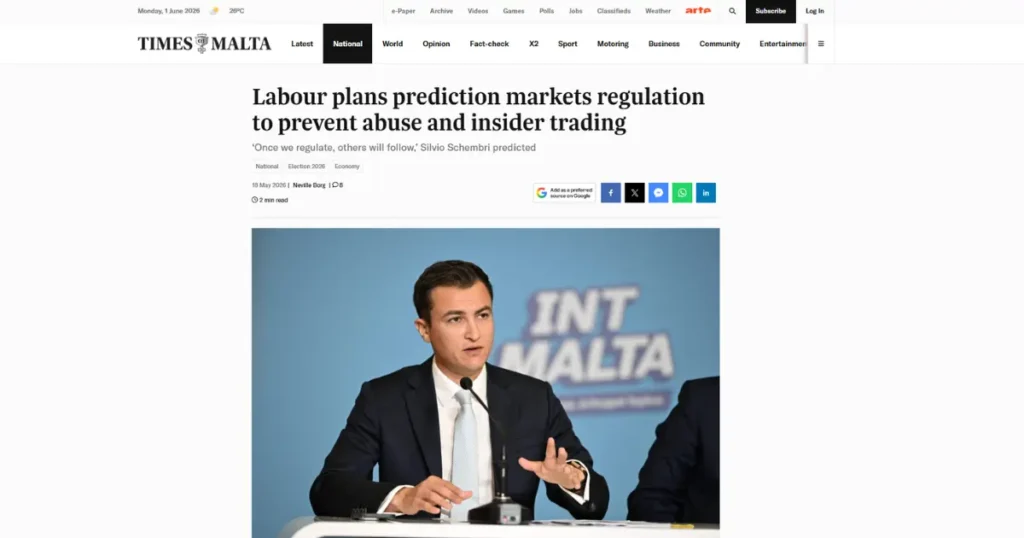
Times of Malta also reported on 18 May 2026 that Labour wants Malta to become one of the first countries to regulate prediction markets. In that report, Silvio Schembri’s comments on abuse and insider trading linked regulation to concerns about user protection, abuse and potential insider information.
Malta’s position is not simply promotional. The public statements point to a regulatory opportunity, but also to concerns around transparency, compliance, user protection, abuse and insider information. That matters because prediction markets can only become credible at scale if users, operators and regulators trust the integrity of the market.
The significance of Malta’s approach extends beyond the local market. At a time when many jurisdictions are still debating whether prediction markets should fall within gambling, financial services or alternative regulatory frameworks, Malta appears willing to engage with the issue rather than simply prohibit activity pending further clarity.
For operators, investors and technology providers, this willingness to engage may prove as important as the eventual regulatory outcome itself.
For founders and operators, this is the commercial point. Malta prediction markets regulation may become attractive because it could offer a more structured route than operating without clear local positioning. At the same time, operators should not treat political interest as approval for every model.
Why the MGA Framework Matters
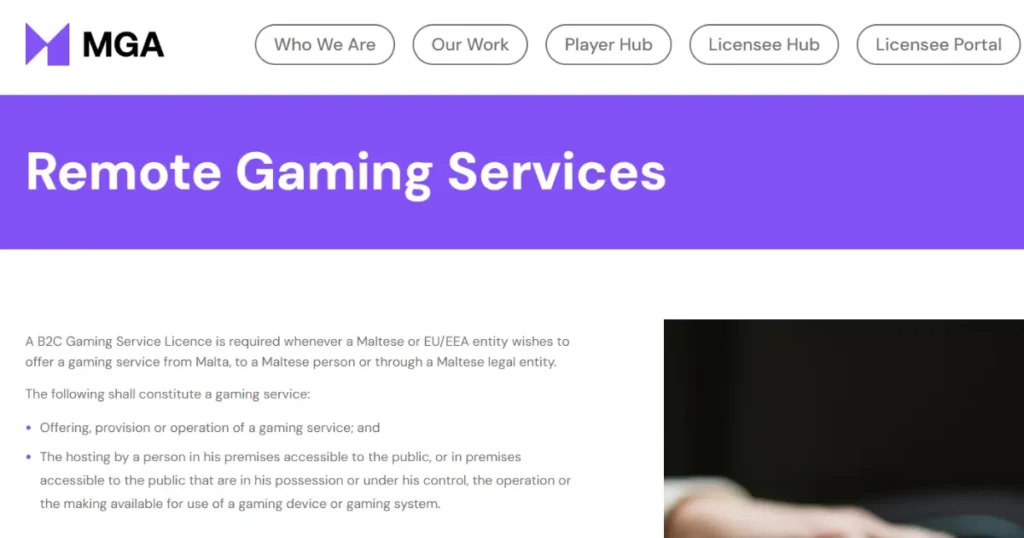
The Malta Gaming Authority already has licence categories that may be relevant when assessing certain prediction market models.
The MGA remote gaming service types confirm that Type 2 covers fixed odds betting, including live betting. The same MGA page confirms that Type 3 includes pool betting, betting exchange, peer to peer poker, peer to peer bingo, other peer to peer games and commission-based games.
This matters because some prediction market products may resemble fixed odds betting. Others may look closer to exchange based or peer to peer gaming. A commission-based prediction market could also raise different questions from a product where the operator acts as counterparty.
That does not mean every prediction market automatically fits within an existing MGA licence. Nor does it mean that an MGA licence is guaranteed. It means Malta already has regulatory categories that may be relevant to parts of the model, especially where the product resembles recognised gaming activity.
Operators exploring Malta gaming licence support should therefore start with a proper product assessment rather than a label. The name “prediction market” is less important than how users stake, how odds or prices are formed, how settlement works and how the operator earns revenue.
The MGA framework also matters because it is already built around a licensing and supervisory process. Applicants are generally expected to demonstrate that they are fit and proper, have a viable business strategy, satisfy statutory requirements, have operational capacity, and have correctly implemented what has been applied for before going live. The application process also involves review of ownership, UBOs, key persons, funding, business plans, operating policies and technical documentation.
What Industry Discussions Suggest About the Next Step
Based on industry discussions attended by A2CO, the likely direction may be a layered approach. Elements of prediction market models that already resemble recognised gaming activity may be assessed through current or updated MGA licence routes, while features that fall outside the current framework may need further guidance or a more specific regime.
This would be a practical way to deal with a mixed product category. It would also reflect how prediction markets operate in practice. Some platforms are closer to event-based betting. Others include crypto settlement, decentralised governance, automated market making, tokenised positions or oracle-based resolution.
Industry reporting has also suggested that prediction markets may fit within existing MGA rules, while noting that changes may still be possible. That is a useful signal, but operators should still proceed carefully. Public commentary is not a substitute for a formal regulatory assessment.
Companies considering prediction markets MGA options should prepare documentation that explains the model clearly. A regulator, adviser or compliance team should be able to understand the market mechanics without needing to infer how the product works.
The better prepared operators will be those that can explain not only what the product does, but how risks are controlled. That includes how markets are created, how prohibited events are excluded, how users are onboarded, how outcomes are verified, how disputes are handled, how suspicious activity is monitored and how the operator ensures that its activity remains within the boundaries of its regulatory permissions.
What May Need Updated Rules or New Frameworks
Certain features may require more detailed rules, even where part of the product resembles existing gaming activity.
Prediction markets insider trading is one obvious concern. If a market allows users to take positions on outcomes where some people may have access to non-public information, the operator needs a clear policy on market integrity, prohibited conduct and abuse monitoring.
Event manipulation is another risk. Political markets, sports linked markets and financial event markets may create incentives for people to influence outcomes or misuse privileged information. This is especially sensitive where markets relate to elections, regulatory decisions, company announcements or crypto listings.
Crypto settlement can also complicate the analysis. If users deposit or withdraw digital assets, operators may need to consider specific AML controls, custody arrangements, transaction monitoring and whether MiCA regulatory support or CASP licence support could be relevant.
Decentralised governance and oracle-based settlement raise further questions. Regulators may wish to understand who controls the market rules, who selects the oracle, how outcomes are verified, whether results can be challenged, and what escalation procedures apply if an event cannot be resolved clearly. These questions are not only technical. They go directly to fairness, accountability, market integrity, user protection and dispute handling.
Malta regulation also does not remove every foreign law issue. If users are accepted from other jurisdictions, operators still need to assess local restrictions, advertising rules, consumer rules and gambling or financial services perimeter issues in those countries.
What Operators Should Do Now
Operators should not wait for every detail of prediction markets regulation Malta to be finalised before doing the groundwork. The strongest early movers will be those that can explain their model, evidence their controls and adapt quickly when rules become clearer.
- Map the product model. Define whether the product is fixed odds, exchange based, peer to peer, commission based, automated market maker based or a hybrid model.
- Identify event categories. Separate sports, politics, entertainment, crypto, finance and other event types, because each category may carry different regulatory risk.
- Review the revenue model. Explain whether the operator earns from spread, commission, trading fees, liquidity provision, user losses or another source.
- Assess user jurisdictions. Identify where users are based, where marketing takes place and which countries may require local review.
- Review AML and KYC controls. Prediction markets can involve payment, wallet and transaction risks. Operators should assess onboarding, monitoring and source of funds controls. A2CO can assist with AML and KYC procedures where these need to be documented.
- Test market integrity safeguards. Review insider information controls, event manipulation rules, suspicious activity monitoring and market suspension procedures.
- Document the settlement process. Set out how outcomes are verified, who can challenge a result and what happens if a market cannot be resolved cleanly.
- Review technology suppliers. Operators using third party pricing engines, oracle providers, wallet tools or software platforms should assess outsourcing, resilience and accountability.
- Prepare a Malta setup plan. This may include entity structuring, substance, governance, local roles, operational workflows and Malta company formation where appropriate.
This preparation also helps when discussing MGA key function support and broader compliance support for regulated businesses.
Why Malta Has Emerged as a Serious Regulatory Option
Malta has emerged as one of the jurisdictions actively exploring how prediction market activity may fit within an established regulatory framework. It has an established gaming regulator, existing licence categories that may be relevant to certain models, and public political momentum around creating clearer rules.
The opportunity is real, but operators should not assume that every prediction market model will be treated the same way. A fixed odds event product, peer to peer market, crypto settled market and politically sensitive market may each need a different assessment.
For operators, the best approach is to treat Malta as a serious option, not as a shortcut. The right question is not whether Malta will approve prediction markets in general. The right question is whether your specific model can be structured, documented and controlled in a way that fits Malta’s regulatory direction.
This is where early advice becomes valuable. A well-prepared operator should be able to present a structured analysis of the product, the applicable regulatory considerations, the intended markets, the control environment and the practical steps required to become Malta-ready.
Speak to A2CO About Prediction Markets in Malta
A2CO supports operators assessing Malta as a base for prediction market activity. Our team can help review your model, identify possible MGA licensing considerations, assess compliance gaps and prepare a practical Malta readiness plan.
We assist businesses in understanding how regulators are likely to assess their specific model, identifying potential compliance gaps and preparing a practical roadmap for regulatory engagement.
Read more about our prediction markets Malta regulatory support or book a Malta regulatory readiness call with our team.