How to Prepare for an MGA Compliance Audit: A Practical Guide for Licence Holders
An MGA Compliance Audit is a critical regulatory review that assesses whether a licence holder is operating in accordance with MGA requirements, approved policies, and internal procedures. As the MGA increasingly focuses on ongoing compliance and licence renewals, operators should prepare well in advance to avoid delays, minimise findings, and ensure a smooth audit process. This guide sets out five practical steps MGA licence holders can take to prepare.
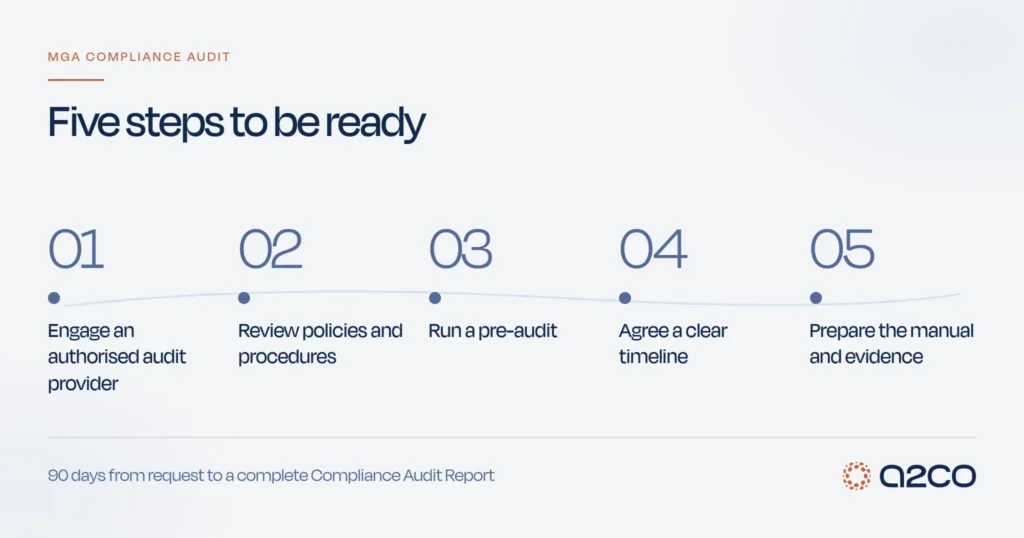
A Malta Gaming Authority (MGA) Compliance Audit is a key regulatory milestone for licence holders. It is an opportunity to demonstrate that the MGA licence holder operates in line with its licence conditions, approved policies, internal procedures, and applicable MGA requirements. The MGA has increasingly required operators to undergo compliance audits during the term of their licence, with greater emphasis placed on demonstrating ongoing compliance ahead of a licence renewal. As a result, early preparation and continuous compliance monitoring have become essential to ensure a smooth audit process.
Proper preparation helps minimise operational disruption, reduce the risk of findings which could be avoided, and ensure that any potential gaps are identified before the formal audit begins. This article outlines a practical approach to prepare for an MGA Compliance Audit. It is structured around five practical steps that licence holders can take to prepare for an MGA Compliance Audit in a more organised, efficient, and evidence-driven manner.
1. Engaging an MGA-Approved Audit Service Provider
Once the MGA request for a compliance audit has been received and acknowledged, the licence holder will be expected to communicate the identity of the engaged MGA approved Audit Service Provider to the Authority within a specified timeline.
An important step in the process is to select an appropriately authorised Audit Service Provider with experience in conducting MGA System and Compliance Audits. Licence holders should also take into account internal procurement or approval procedures that may require multiple quotations or management sign-off before an auditor can be formally engaged.
Completing these steps early helps avoid unnecessary delays. The MGA generally allows operators 90 days to submit a complete Compliance Audit Report, meaning that time lost during the appointment stage can place pressure on the remainder of the audit process.
Engaging an experienced audit provider can assist the licence holder to:
- Establish the right structure for the audit process;
- Support clear communication between the auditor and the licence holder;
- Understand compensating controls and assess the control environment holistically, rather than treating the audit requirements as a simple checklist.
For example, holding a valid ISO/IEC 27001 certification may result in certain compliance audit checks being waived, as the certification provides independent assurance that specific controls and processes have already been assessed against recognised standards.
Once the Auditor has been selected, it will be time to get your internal affairs in order. Licence holders should immediately assess whether their current policies, procedures, and supporting documentation are up to date and properly maintained. This initial review sets the foundation for the remainder of the audit preparation process.
2. Review Policies and Procedures Against the MGA System Documentation Checklist
Internal policies and procedures should be reviewed regularly and whenever material operational or regulatory changes occur. Before an MGA Compliance Audit, this review becomes particularly important because the documentation must accurately reflect how the business operates in practice.
As part of this review, the licence holder should ensure that:
- All applicable policies and procedures that have been updated are uploaded within the MGA Portal, where applicable;
- Documentation is current, approved, and reflects the actual operations of the business;
- Policies address all relevant requirements outlined in the MGA System Documentation Checklist;
- Policies do not merely exist as formal documents, but clearly explain the controls implemented in practice in a way that can be understood by both technical and non-technical stakeholders.
A common audit observation arises when policies describe controls that are not fully implemented operationally. For this reason, documented procedures should be aligned with the organisation’s practices and should be supported by evidence showing that the relevant controls are functioning effectively.
Recommended tip: Maintaining a policy register will help you locate notified or approved policies quickly during audit preparation.
3. Conduct a Pre-System and Compliance Audit
Before the formal MGA Compliance Audit takes place, licence holders should consider conducting a pre-system or compliance audit. This internal or independent readiness assessment can help identify issues early and provide sufficient time for remediation.
A pre-audit allows the licence holder to:
- Identify compliance gaps;
- Test whether controls operate effectively;
- Review the availability and quality of evidence;
- Prepare staff for audit interviews;
- Address potential findings before the formal audit.
The pre-audit should replicate the methodology of the MGA audit as closely as possible, including:
- Documentation reviews;
- Technical assessments;
- Control testing;
- Interviews with key personnel, and
- Evidence verification.
Any findings identified during the pre-audit should be documented, assigned to responsible persons, and remediated before the formal audit.
4. Establish a Clear Audit Timeline
Once the auditor has been appointed, the licence holder should agree on a clear audit timeline. This timeline should be realistic, taking into account business operations, the availability of key personnel, and the time required to collect, review, and organise supporting evidence.
The audit timeline should consider:
- Audit planning and preparation activities;
- Availability of key personnel;
- Collection and review of supporting evidence;
- Technical walkthroughs;
- Interviews with relevant stakeholders;
- Completion and submission of the audit report.
Early planning allows sufficient time to address any deficiencies identified during preparation and ensures that all required information is available when requested by the auditor.
5. Review the Compliance Manual and Prepare Evidence
The Compliance Manual and related system documentation form the basis for demonstrating compliance with MGA requirements. To make the process easier to manage, a responsible person should be assigned to each audit area. These individuals should get familiar with the audit checks, coordinate the collection of information within their respective areas and direct all responses through the person assigned to communicate with the MGA auditor.
Responsible Persons for Each Audit Area
For each compliance area, a key person responsible for supporting the audit process should be identified. The individuals assigned as audit point of contact should have a clear understanding of the relevant controls, be readily available throughout the audit period, possess sufficient knowledge to explain the organisation’s processes and procedures, and be able to provide supporting documentation upon request. Several of these areas map directly onto MGA Key Function holders. Establishing clearly identified points of contact helps ensure that audit requests are managed efficiently, facilitates effective communication with auditors, and minimises unnecessary delays throughout the audit process.
Collecting Audit Evidence
Evidence preparation should begin well before the audit starts. A practical tip is to reference evidence directly against the applicable audit check. This allows the auditor to easily retrieve and verify compliance while reducing the time required during the audit fieldwork.
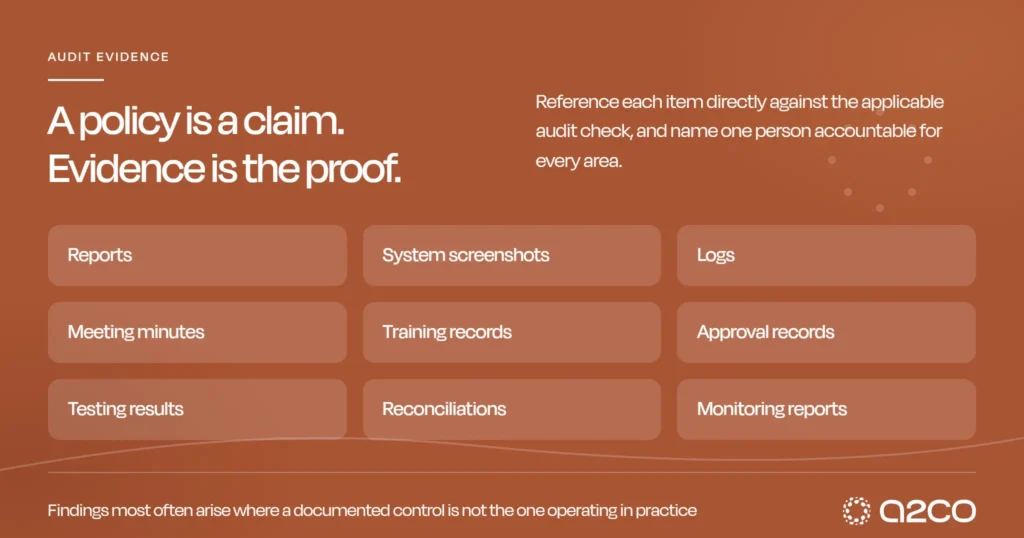
Keeping this evidence accurate, organised, and readily available helps demonstrate compliance, supports the audit process, and enables timely responses to auditor requests.
Final Thoughts
A successful MGA Compliance Audit depends on preparation, organisation, and continuous compliance management. Rather than treating the process as a one-off regulatory requirement, licence holders should use it as an opportunity to test whether their governance framework, operational processes, and technical controls remain effective.
By engaging an experienced MGA audit service provider and applying the practical tips outlined in this article, licence holders can approach the audit process with greater confidence, strengthen their state of readiness, and demonstrate a proactive commitment to ongoing regulatory compliance and good governance.